
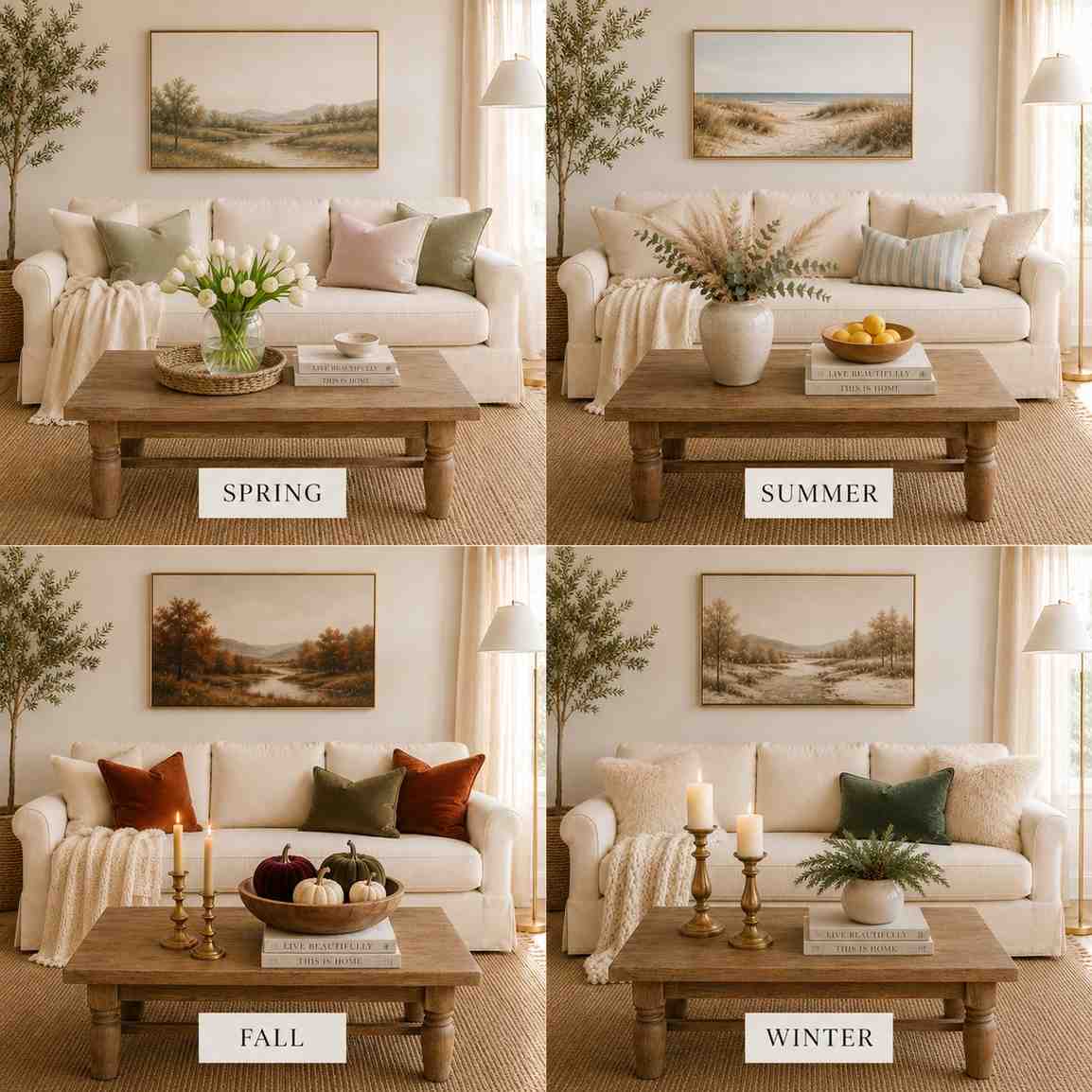
Seasonal decorating sounds easy until you actually try it. You scroll Pinterest. You save 200 ideas. You go to Target. You buy a $40 wreath, three pumpkins, a candle, and a wooden sign. Two hours later, your house looks like a craft store threw up in the living room. Six weeks later, it all goes in a closet and you swear you’ll never decorate again.
Sound familiar?
Here’s the truth nobody tells beginners: seasonal decorating isn’t about buying more. It’s about a small foundation that stays the same all year, plus a tiny set of swaps you make four times. That’s it.
This guide walks you through every part of seasonal decorating from scratch. The foundation rules. The 80/20 budget formula. Exactly what to swap each season. How to store everything. And what mistakes to avoid. Whether you’ve never decorated before or you’ve tried and given up, this is the guide that finally makes it click.Let’s start with the basics.
Part 1: The Foundation (Get This Right and the Rest Is Easy)
Most beginners fail at seasonal decorating because they skip the foundation. They start with the seasonal stuff first, then wonder why nothing looks cohesive.
The foundation is what stays in your home all year. The seasonal pieces are what change. If your foundation is right, swapping a few accents 4 times a year is all you ever need to do.
There are 4 foundation principles. Master these and you can decorate for any season.
Foundation Rule 1: The 80/20 Rule
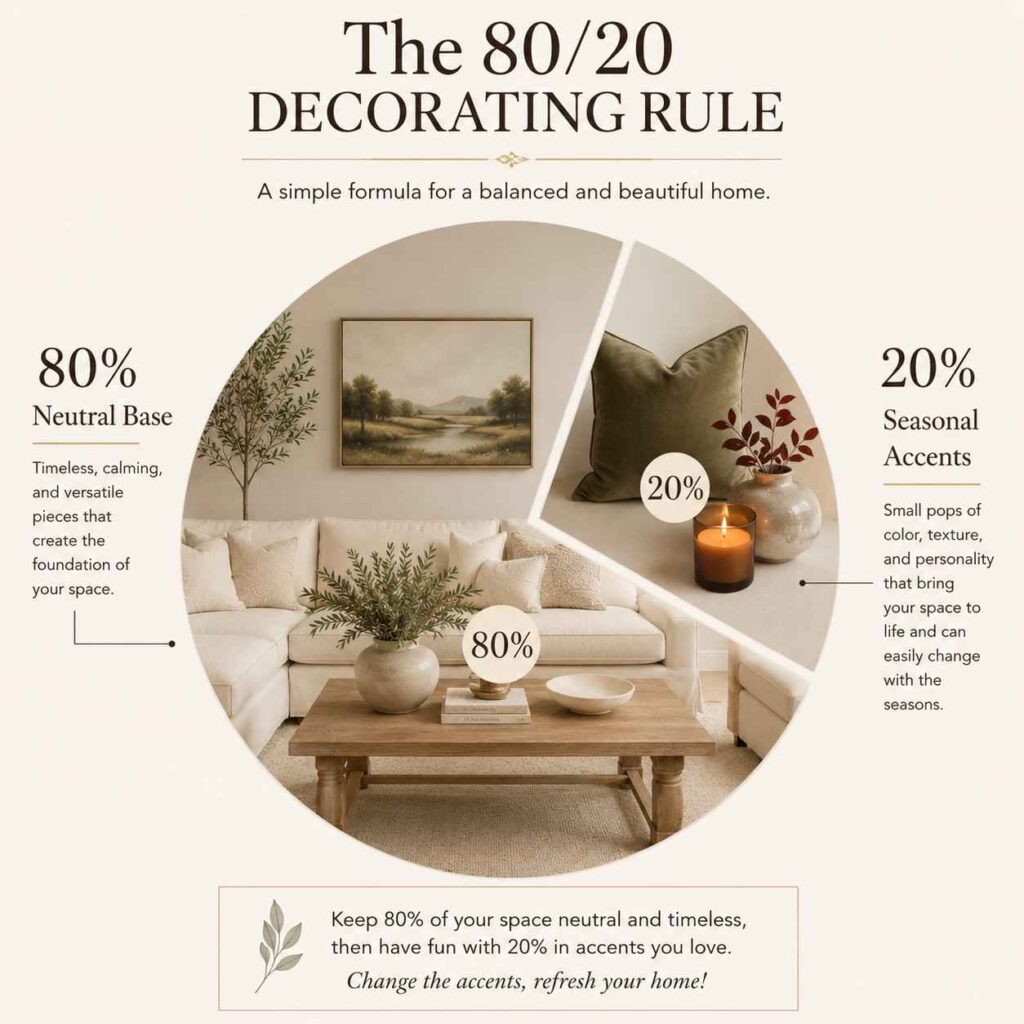
This is the single most important concept in decorating. Designers have used it for decades.
Here’s how it works:
- 80% of your room should be neutral, timeless, and stay the same all year. Walls, furniture, rugs, large lamps, curtains, and big art pieces.
- 20% of your room is what changes with the seasons. Throw pillows, blankets, small decor on shelves and tables, candles, fresh flowers, and door wreaths.
Think of it this way: 80% pays the bills (the stuff that looks good year-round). The other 20% is where you have fun (the stuff that makes it feel seasonal).
Beginner Tip: If you’re decorating from scratch, build your 80% first. Don’t buy any seasonal decor until you have a neutral foundation. It’ll save you hundreds of dollars in mistakes.
Foundation Rule 2: Build a Neutral Base
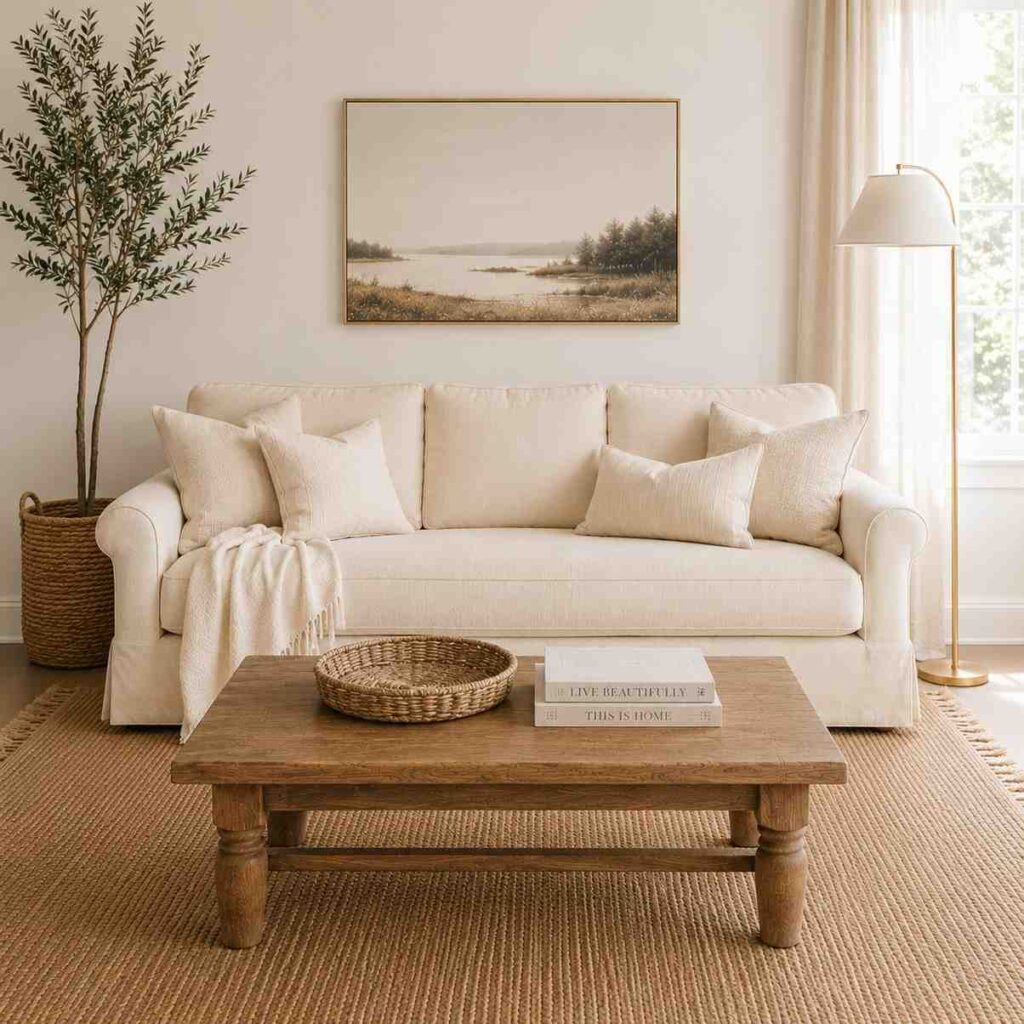
Your foundation pieces (the 80%) need to be neutral. Not boring. Neutral.
Here’s what counts as a smart neutral base:
- Wall color: Soft white, warm beige, light gray, or greige. Skip the trendy colors.
- Sofa: Cream, oatmeal, soft grey, or warm tan. Avoid red, navy, or anything too bold.
- Rugs: Jute, sisal, or wool in cream, oatmeal, or natural tones.
- Curtains: Cotton or linen in white, ivory, or natural beige.
- Large furniture: Wood (oak, walnut, pine) or upholstered in neutral fabric.
If your existing furniture is bright red or bold blue, you don’t have to throw it out. You’ll just need to work harder with your 20% to balance it. But for anyone starting from scratch, neutral is always the smarter long-term choice.
Beginner Tip: Look at your favorite Pinterest-worthy home photos. Notice how 80% of every room is neutral, even the rooms that look colorful. The ‘colorful’ part is almost always a small accent area, not the whole space.
Foundation Rule 3: Pick Year-Round Pieces That Look Great Empty
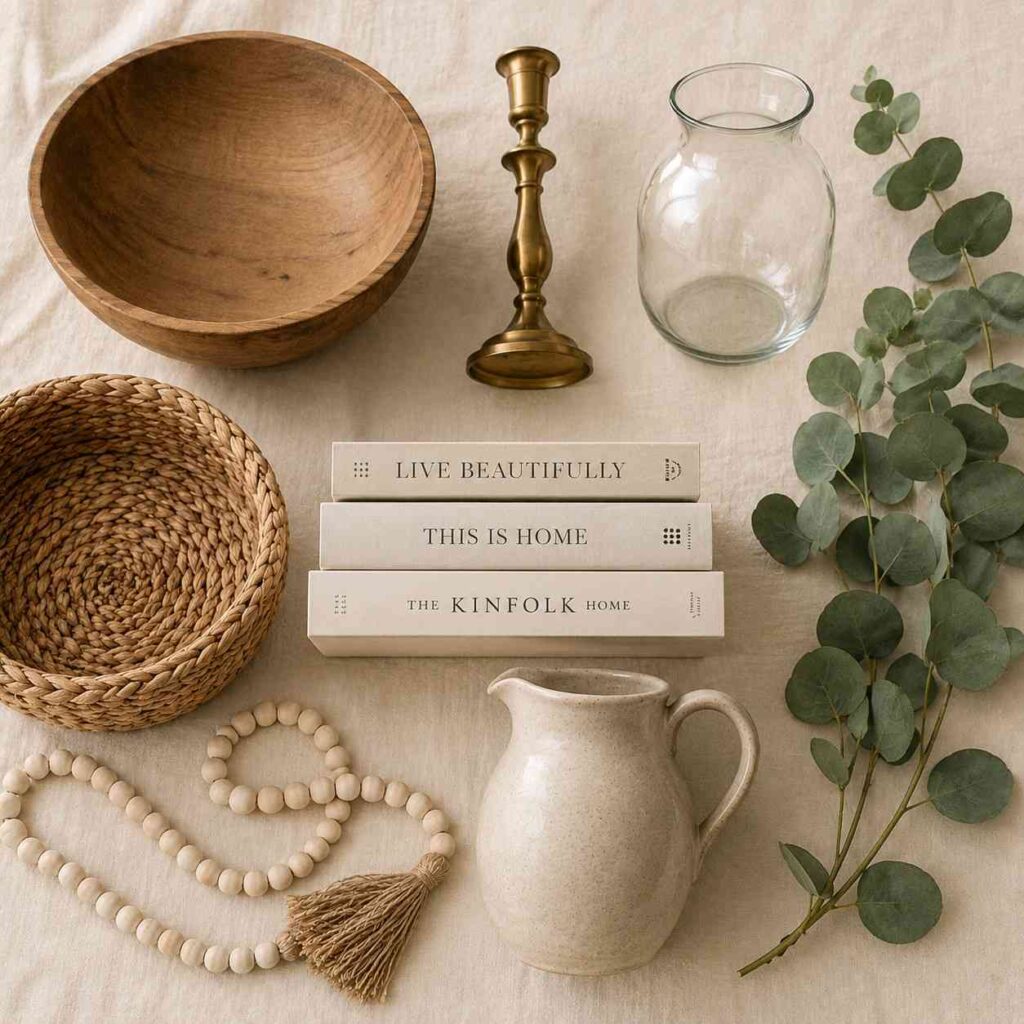
Your foundation pieces should look good even when there’s nothing seasonal on them. If your shelf only looks ‘finished’ when it’s stuffed with fall pumpkins, your foundation isn’t strong enough.
Year-round pieces that work in every season:
- A large mirror (above the mantel or in the entryway)
- Wooden bowls or trays (fill with seasonal items as needed)
- Plain glass jars and clear vases (the same vase works for tulips, sunflowers, dried wheat, and evergreens)
- Brass or wood candle holders
- A stack of hardcover books in neutral spines
- Woven baskets (use them for plants in spring, blankets in winter)
- Faux greenery in eucalyptus, olive branch, or magnolia
- A nice ceramic pitcher (looks good empty or filled with anything)
Buy these once. Use them for years. Build everything else around them.
Beginner Tip: A wooden bowl is the single most versatile decor item you’ll ever own. It holds seashells in summer, mini pumpkins in fall, pinecones in winter, and tulips floating in water in spring. One purchase, four seasons.
Foundation Rule 4: The ‘Vignette’ Approach (Group in Threes)
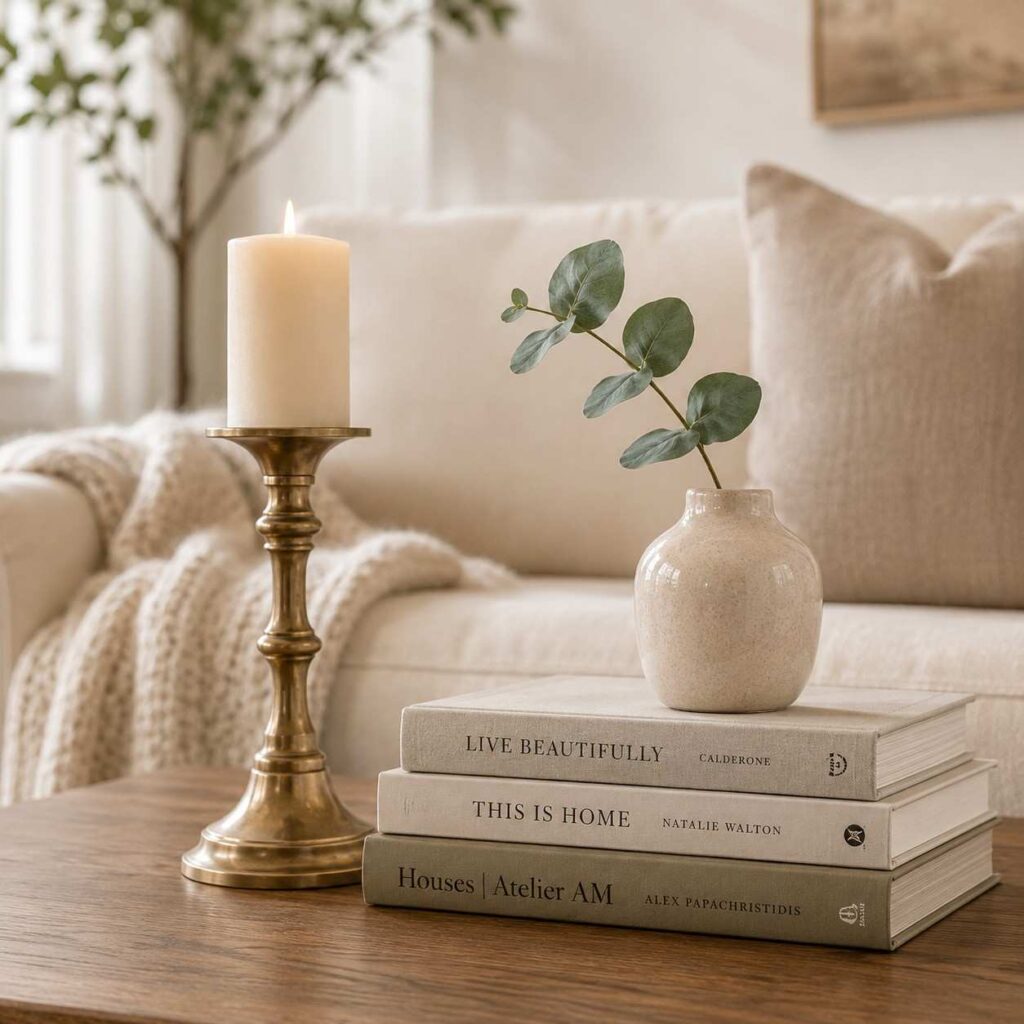
A vignette is a small grouping of 3 items that work together. Designers use them everywhere: on coffee tables, mantels, shelves, nightstands, and entryway tables.
The classic vignette formula:
- Something tall (a candlestick, a vase with stems, a tall lamp)
- Something medium (a stack of books, a small framed photo, a small bowl)
- Something organic (a plant, a piece of greenery, fresh flowers)
That’s it. One tall, one medium, one organic. The seasonal version just swaps out the ‘organic’ item: tulips in spring, lavender in summer, dried wheat in fall, evergreen sprig in winter.
Beginner Tip: If your decorating ever feels overwhelming, stop and build one vignette. One small grouping of 3 items in one spot. It’s the smallest decorating win you can have, and it builds momentum.
Part 2: The Seasonal Swaps (What Actually Changes 4 Times a Year)
Now that your foundation is set, here’s the magic: you only need to swap a small set of items four times a year. Some people call this the ‘swap list.’ It’s the same 6 to 10 categories, just in different seasonal versions.
Here are the things that change with each season:
- Throw pillows (2 to 4 per sofa)
- Throw blankets (1 to 2)
- Fresh or faux florals on display
- Candles and their scents
- Front door wreath
- Doormat
- Small accents on shelves and tables (pumpkins, ornaments, eggs, sea glass)
- Bedding (optional, but powerful)
That’s the complete list. Nothing else needs to change. The rest of your home stays exactly the same year-round.
Let’s walk through what each season actually looks like.
🌷 SPRING DECORATING (March, April, May)
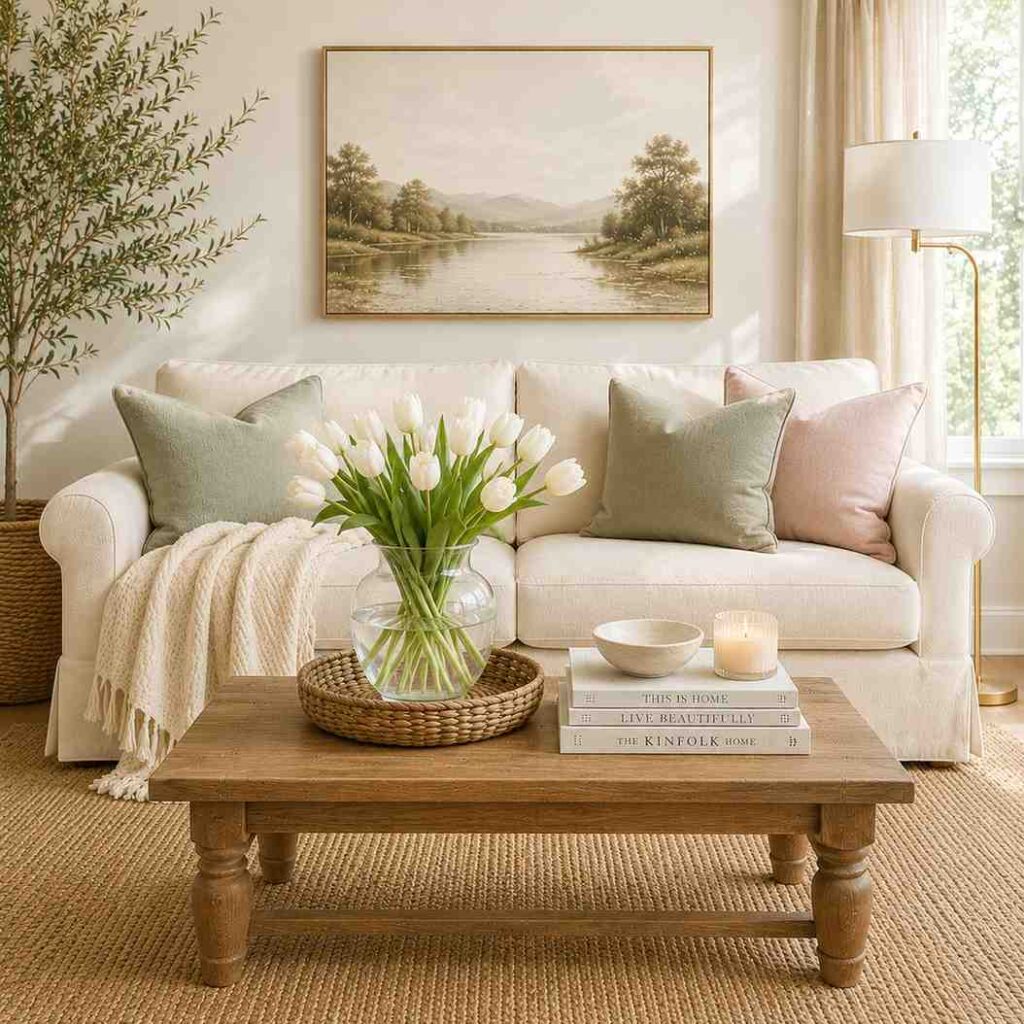
Spring decorating is about waking up your home after winter. The goal: lighter, brighter, with hints of green and pastel. Skip the in-your-face Easter bunnies unless that’s your personal style.
When to start: Late February to early March
Don’t wait for the spring equinox if your area is already warming up. The first week of March is the sweet spot for most US climates.
Spring color palette
- Cream and soft white
- Sage green and warm olive
- Pale pink and dusty blush
- Soft yellow and butter cream
- Light wood tones
Your spring swap list
- Pillows: Linen in cream or pale pink, one with a soft floral or stripe
- Blanket: Light cotton or linen throw, swap out heavy knit blankets
- Florals: Tulips, daffodils, ranunculus, hydrangea (real or faux)
- Candles: Fresh florals, citrus, or clean linen scents
- Wreath: Boxwood, eucalyptus, or fresh tulips
- Doormat: A pastel or simple striped pattern
- Small accents: Pastel ceramic vases, small bunny figurines (optional), Easter eggs in muted tones
Beginner Tip: If you only buy 3 things for spring, make them a fresh wreath, a bunch of tulips, and 2 new throw pillows. Total cost under $80, and your home will feel completely refreshed.
🌞 SUMMER DECORATING (June, July, August)
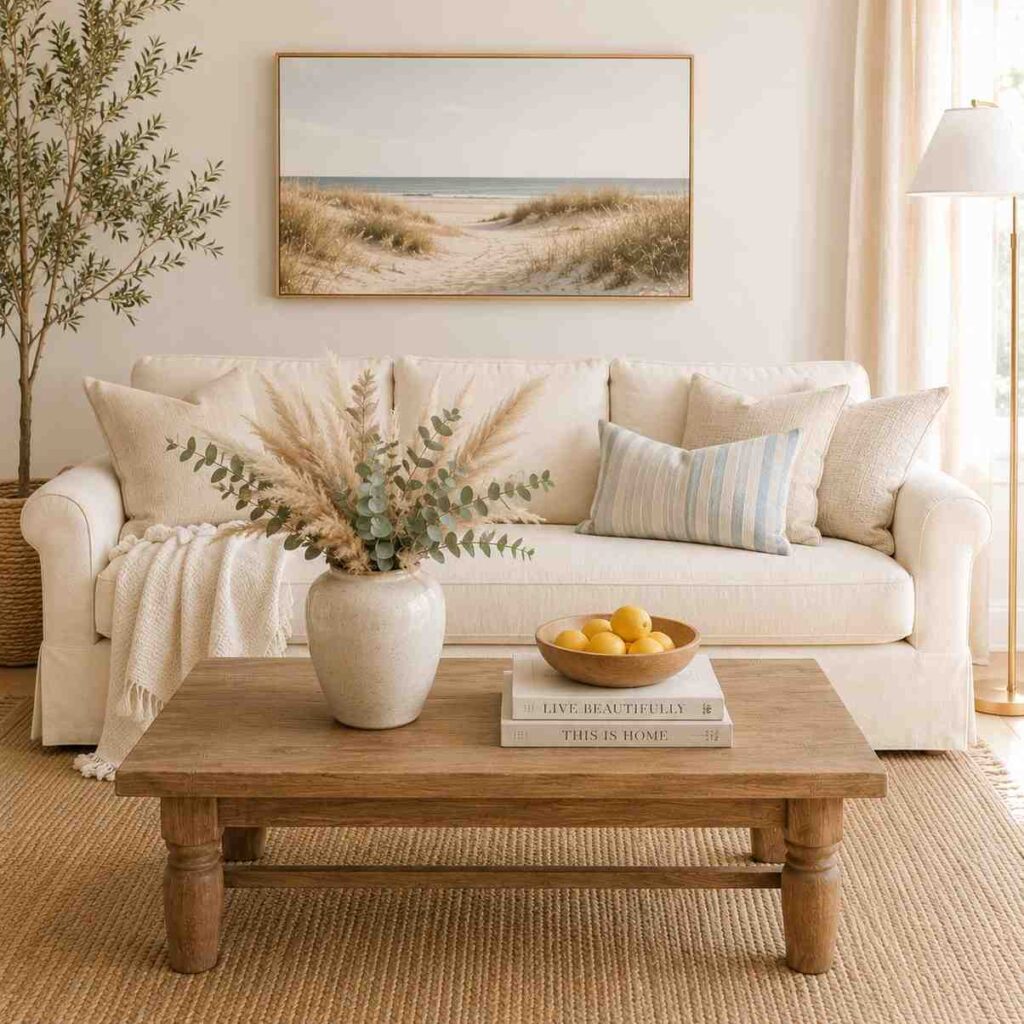
Summer decorating is the easiest of all four seasons because nature does most of the work. Your goal: keep it light, breezy, and minimal. Less is more in summer.
When to start: Mid-May (around Memorial Day)
Once spring florals are wilting, transition to summer. This is also the perfect time to do less, not more.
Summer color palette
- Cream and warm white
- Sea glass, pale aqua, dusty blue
- Sandy beige and oatmeal
- Sun-bleached neutrals
- Pops of warm yellow (citrus, sunflowers)
Your summer swap list
- Pillows: Cotton or linen in white, oatmeal, or pale aqua, with one striped or palm print accent
- Blanket: Lightweight cotton waffle or linen throw (use as a casual drape only)
- Florals: Sunflowers, dried pampas grass, fresh herbs, lemons or limes in a bowl
- Candles: Coconut, sea salt, citrus, or beach grass scents
- Wreath: Grapevine, dried palm, or eucalyptus
- Doormat: Simple natural fiber or coastal stripe
- Small accents: Seashells, driftwood, sea glass, a bowl of lemons, fresh herbs in jars
Beginner Tip: Summer is the one season where you should add LESS, not more. Strip away the heavy textures from spring (knit blankets, dense florals) and just add 2 or 3 fresh elements. A bowl of lemons does more for your kitchen than a $50 summer wreath.
🍂 FALL DECORATING (September, October, November)
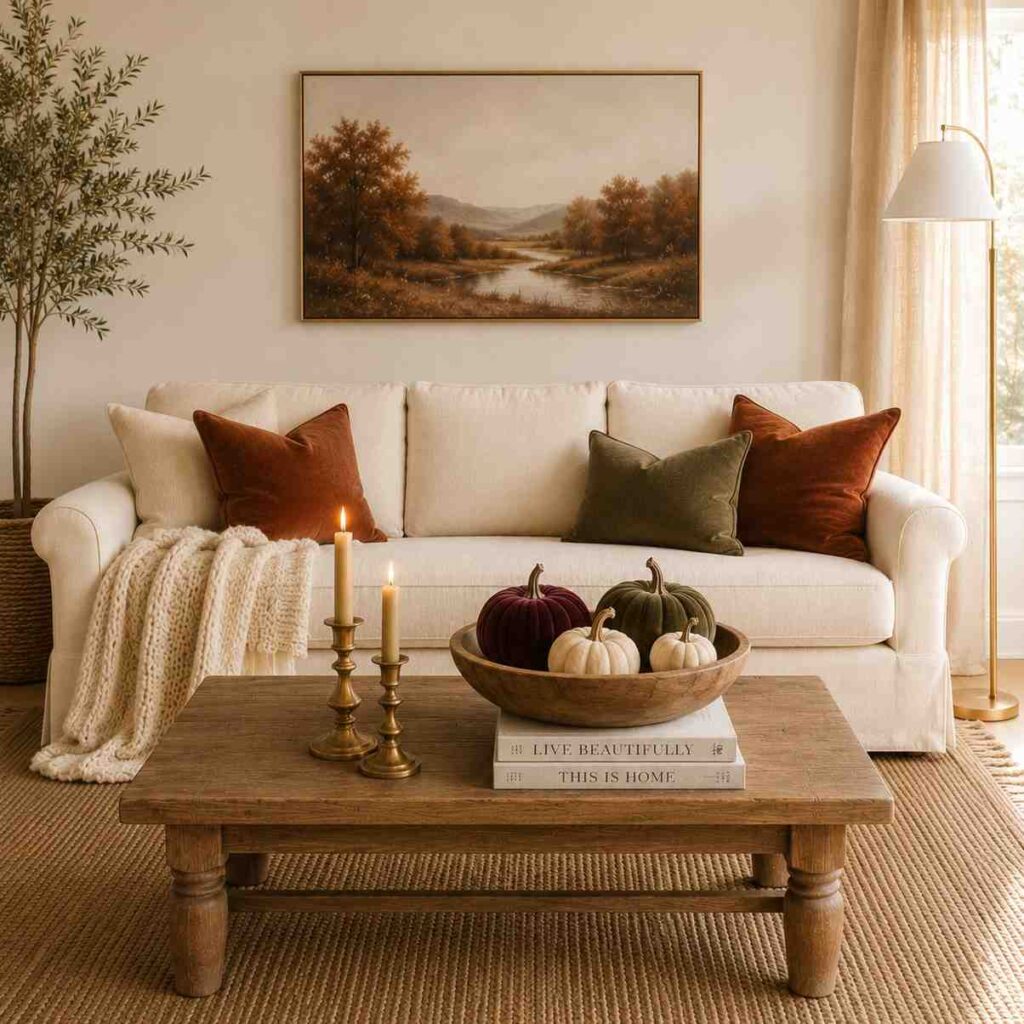
Fall is the most fun season to decorate for, and also the easiest to overdo. The trick: choose a fall palette and stick to it instead of mixing 3 different fall styles.
When to start: First week of September
Don’t decorate for fall in August even if the stores try to push you. Wait until September when the weather actually starts to shift. Halloween decor can come out the last week of September.
Fall color palette (2026 designer-approved)
- Warm rust and burnt orange
- Deep olive and forest green
- Plum and burgundy
- Ochre and golden mustard
- Terracotta and clay
- Rich charcoal and dark brown
Your fall swap list
- Pillows: Velvet in rust, olive, or plum, plus one knit textured pillow in cream
- Blanket: Chunky knit throw in cream, rust, or oatmeal
- Florals: Dried wheat, eucalyptus, magnolia stems, or velvet pumpkins
- Candles: Cinnamon, clove, vanilla, pumpkin spice, smoky cedar
- Wreath: Magnolia, dried wheat, or eucalyptus with a velvet ribbon
- Doormat: Plaid, harvest-toned, or simple natural fiber
- Small accents: Velvet pumpkins, mini gourds, brass candlesticks, pinecones, dried orange slices
Beginner Tip: Skip orange foam pumpkins. They date your decor instantly. Buy 3 to 5 velvet pumpkins in muted colors (plum, sage, cream) and they’ll look designer-quality for 10+ years.
❄️ WINTER DECORATING (December, January, February)
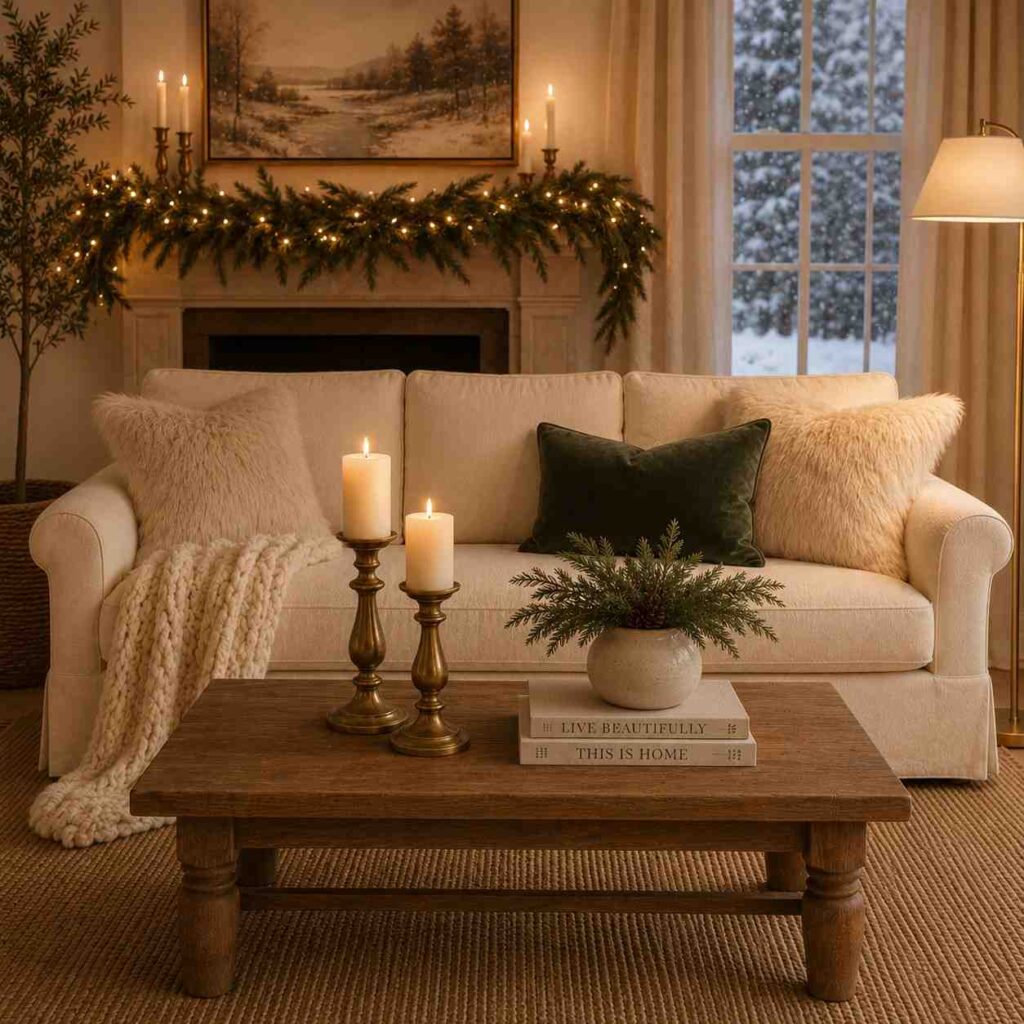
Winter decorating is two phases: Christmas (December) and post-holiday winter (January and February). Most beginners only decorate for Christmas, then leave their house bare for 2 months. Don’t make that mistake.
When to start: Late November for Christmas, mid-January for post-holiday winter
Add holiday-specific items (stockings, Christmas tree, red and green) in late November. After New Year’s, remove only the Christmas-specific pieces. Keep the snowy, evergreen, candlelit base through February.
Winter color palette
- Snowy white and cream
- Evergreen and forest green
- Brass, copper, and warm gold
- Oxblood and deep burgundy (Christmas only)
- Birch white and silver
- Warm amber candlelight
Your winter swap list
- Pillows: Faux fur, velvet, or thick knit in cream, evergreen, or burgundy
- Blanket: Faux fur, wool, or thick knit throw
- Florals: Evergreen branches, eucalyptus, white pine, or frosted branches
- Candles: Cedarwood, fir, vanilla, peppermint, or warm spice scents
- Wreath: Fresh or faux evergreen with pinecones, red berries optional
- Doormat: Plaid, evergreen, or simple natural fiber
- Small accents: Birch logs, pinecones, brass candleholders, faux snow, white pillar candles
Beginner Tip: When you take down Christmas decor in January, only put away the items that are specifically Christmas (stockings, ornaments, red and green). Leave the evergreen, candles, and birch logs out. Your home will feel finished from January through February without much extra effort.
Part 3: How Much to Spend (And Where to Shop)
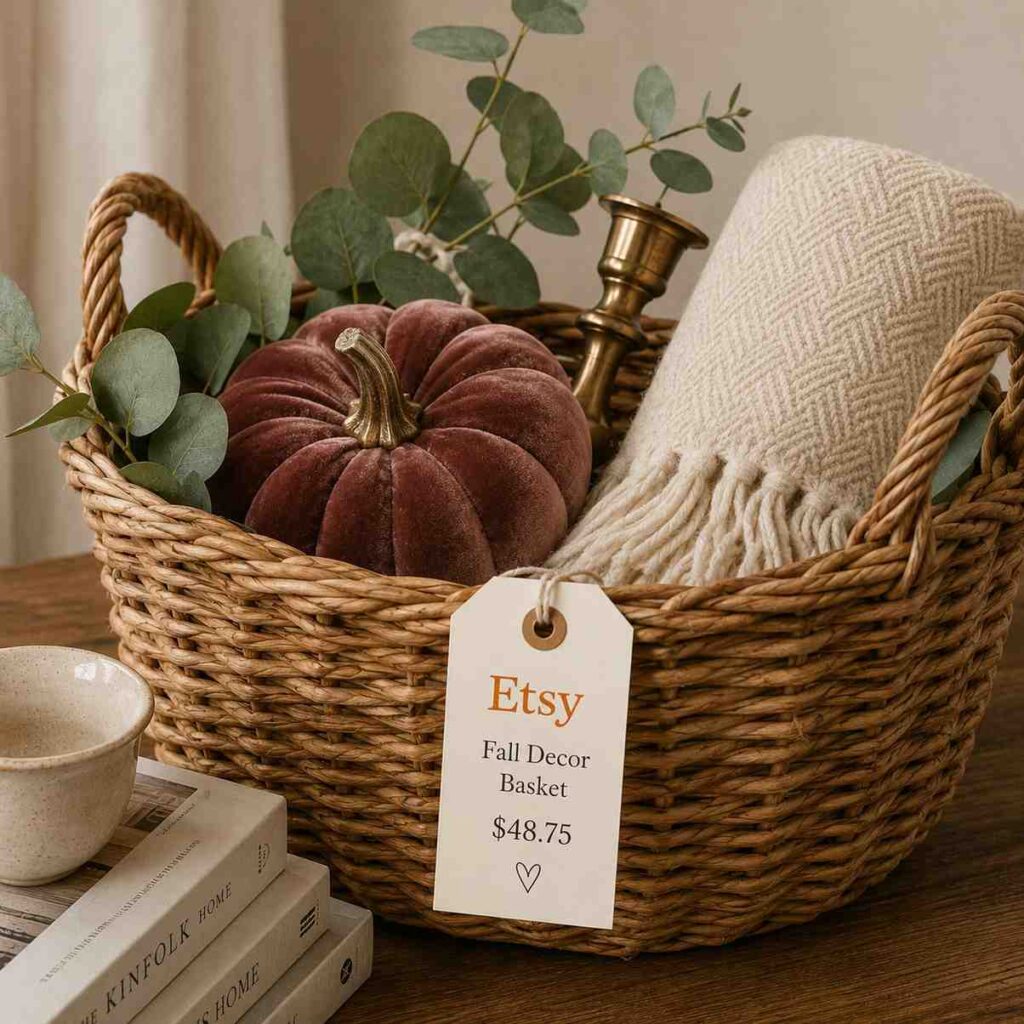
Beginners overspend on seasonal decor because they don’t have a plan. Here’s the budget breakdown that works for almost everyone.
Year One Budget Plan (Total: $400 to $800)
If you’re starting completely from scratch:
- Foundation pieces (80%): $200 to $400 (one-time investment in neutral throw pillows, baskets, candles, vases, wooden bowls, brass candlesticks)
- Spring swaps: $50 to $100
- Summer swaps: $30 to $80 (summer is the cheapest season because you do less)
- Fall swaps: $80 to $150
- Winter swaps: $80 to $200 (especially if you celebrate Christmas)
Year Two and Beyond Budget (Total: $150 to $300 per year)
Once you have a foundation and a basic set of seasonal items, you’ll only need small refreshes each year. Maybe 1 new throw pillow per season. A new candle. A fresh wreath. That’s it.
Where to shop (best to worst value)
- Best value: Thrift stores, garage sales, estate sales (especially for brass, vintage books, wooden bowls)
- Affordable + cute: Target (Threshold and Hearth & Hand lines), HomeGoods, TJ Maxx, Marshalls
- Mid-range: World Market, At Home, IKEA, Hobby Lobby
- Higher end: Pottery Barn, Crate & Barrel, Magnolia Home, Anthropologie
- Best for online finds: Etsy (especially for handmade items like velvet pumpkins and custom wreaths)
Beginner Tip: Shop off-season for huge savings. Buy Christmas decor in January (50 to 70 percent off). Buy fall decor in November. Buy spring decor in May. Save these in labeled bins for the next year.
Part 4: How to Store Everything (The Most Skipped Step)
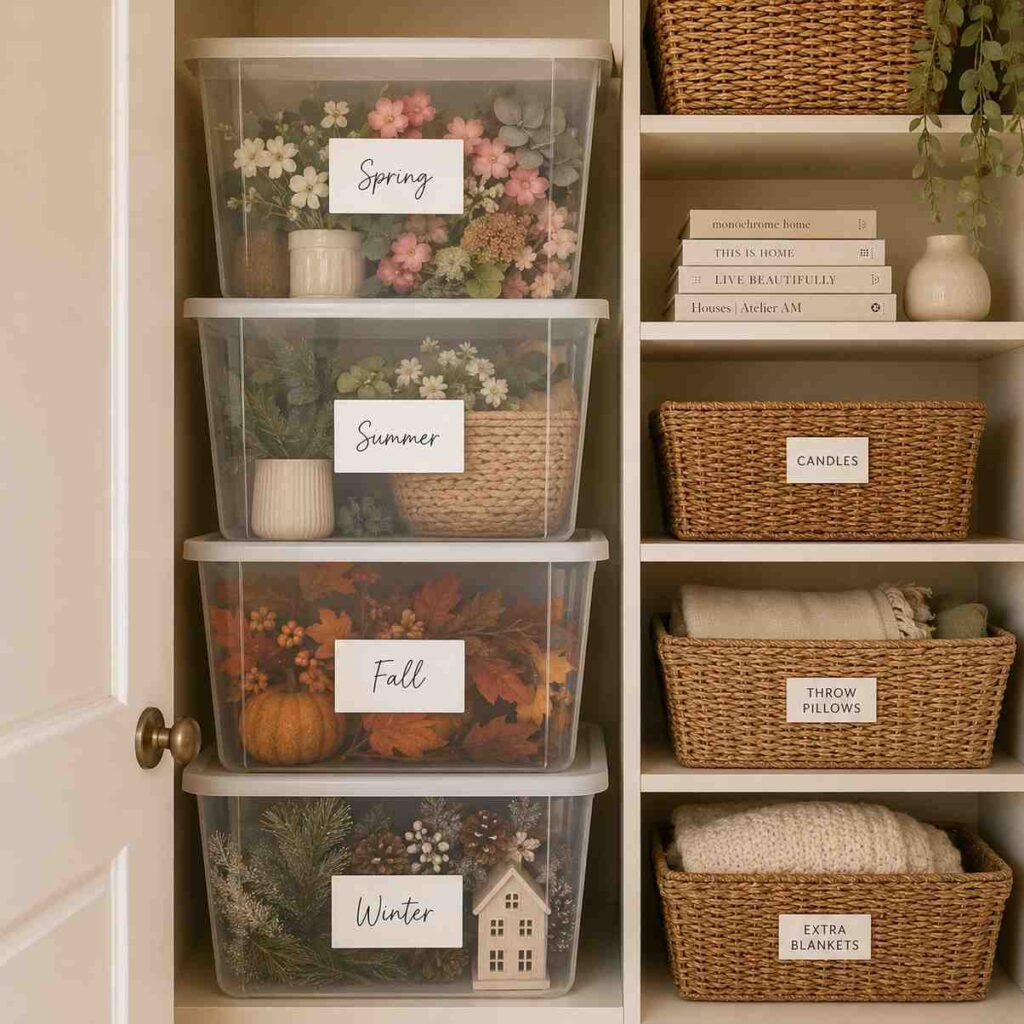
Storage is what separates people who decorate easily from people who give up. If you can’t find your fall pumpkins in October because they’re buried under your Christmas tree, you’ll just buy new pumpkins instead. That’s how clutter and overspending happen.
The 4-Bin Storage System
Get 4 large clear plastic bins (60 to 75 quart size). Label them:
- “Spring” (florals, pastel pillows, Easter items)
- “Summer” (seashells, light pillows, summer wreaths)
- “Fall” (velvet pumpkins, rust pillows, fall wreaths, candles)
- “Winter” (evergreen garlands, faux fur pillows, brass candleholders, Christmas-specific items in a separate sub-bin)
Storage rules to follow
- Use CLEAR bins. You can see what’s inside without opening every box.
- Label each bin on at least 2 sides with permanent marker or printed labels.
- Group similar items together. Keep all pillows in one section, candles in another.
- Store seasonal items in the order you use them. The ‘next season’s’ bin goes in the most accessible spot.
- Declutter as you swap. Each time you switch seasons, throw out or donate items that are broken, faded, or you no longer love.
- Keep a ‘year-round’ bin for foundation pieces you might want to rotate (extra candles, vases, frames).
Where to store the bins
- Best: A dedicated closet or basement shelf
- Good: Under the bed (use slim bin styles)
- Last resort: A garage shelf (just protect from extreme heat or moisture)
- Renter-friendly: A wardrobe rack in a corner with bins on top
Beginner Tip: Don’t store Christmas decor mixed in with general winter decor. Keep a separate small bin labeled ‘Christmas Only’ for stockings, ornaments, and red and green items. This way, you can pull out just the Christmas piece in late November and easily put it away in early January.
Part 5: The 7 Biggest Mistakes Beginners Make
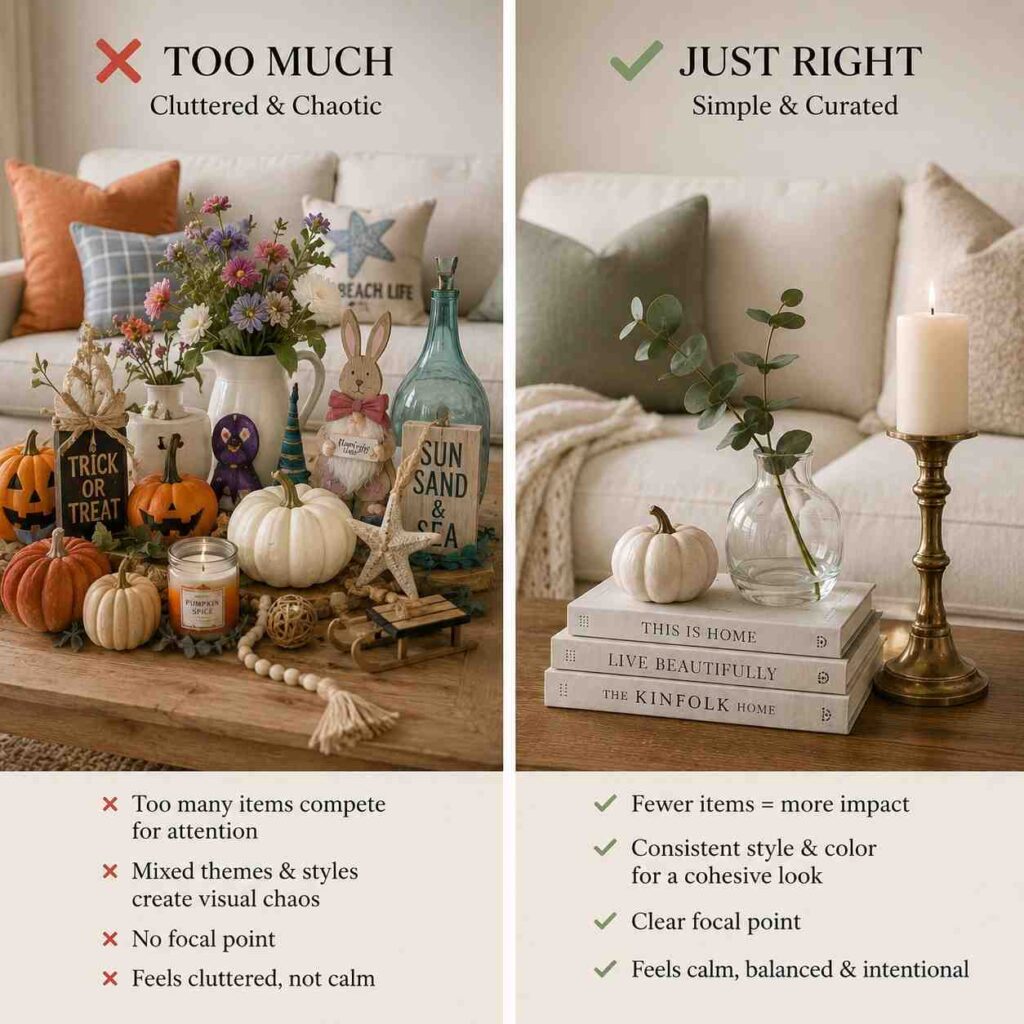
Mistake 1: Decorating room by room instead of by category
Don’t decorate the living room one weekend and the entryway the next. You’ll end up with mismatched styles. Instead, decorate by category: do ALL the pillow swaps across the house in one go. Then all the wreaths. Then all the candles.
Mistake 2: Buying themed sets
Avoid those pre-packaged ‘fall decor sets’ from big box stores. They date your home instantly because they’re built around trendy phrases (‘Hello Pumpkin’) instead of timeless pieces. Buy individual items that work alone.
Mistake 3: Skipping the foundation
If you can’t afford a whole decor refresh, fix your 80% foundation first. A neutral throw pillow and a wooden bowl will serve you for 10 years. A glitter pumpkin won’t survive 2 seasons.
Mistake 4: Following too many trends
Pinterest will give you 50 ‘must-have’ fall items every year. You don’t need any of them. Stick to a few timeless seasonal categories (velvet pumpkins, evergreen garlands, fresh tulips) and skip whatever is trending that specific year.
Mistake 5: Decorating every flat surface
More is not better. A few well-styled vignettes look more sophisticated than 50 small items scattered everywhere. Aim for 3 to 5 styled spots per room, max.
Mistake 6: Forgetting the 5 senses
Visual decor is only one part of seasonal decorating. Smell (candles, fresh greenery), texture (knit throws, faux fur), and even sound (a crackling fire, soft music) all matter. The best seasonal homes engage all 5 senses.
Mistake 7: Not enjoying the process
Decorating should feel fun, not stressful. If you don’t have the energy to fully swap a season, skip it. Just put a fresh candle out. Add a new throw blanket. Done. Seasonal decor is meant to bring joy, not become another item on your to-do list.
Part 6: Your Year-Round Decorating Timeline (Save This)
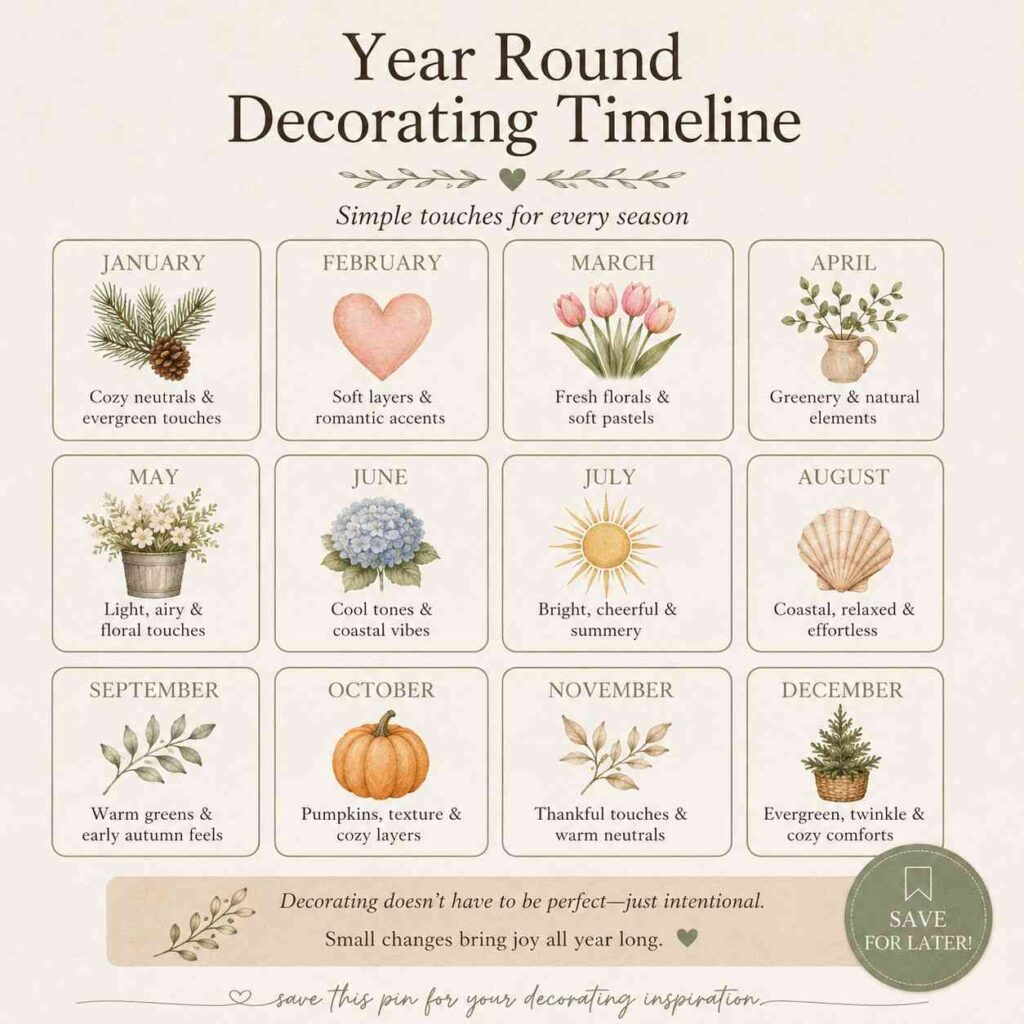
Here’s the full year mapped out so you never feel behind:
January
- Remove Christmas-specific items by January 5
- Keep evergreen, candles, and birch logs out through February
- Add a few cozy throws and warm candles
- Optional: Add small Valentine’s accents late January (red touches, hearts)
February
- Mid-month: Start replacing dark winter items with lighter neutrals
- Wash and put away faux fur throws
- Begin spring planning
March
- Week 1: Pull out spring bin
- Swap pillows, blankets, wreath, candles, doormat
- Add fresh tulips or faux florals
- Optional: Easter accents 2 weeks before Easter
April
- Refresh florals weekly if real
- Add small Easter touches if you celebrate
- Remove Easter items the week after Easter
May
- Mid-month: Transition to summer
- Pull out summer bin
- Remove pastels and dense florals
- Add coastal or sun-bleached elements
June, July, August
- Keep it minimal. Less is more in summer.
- Add fresh herbs or lemons in a bowl
- Optional: Patriotic accents around July 4th
September
- Week 1: Transition to fall
- Pull out fall bin
- Swap pillows, blanket, wreath, candles, doormat
- Add velvet pumpkins, brass candleholders, dried elements
October
- Optional: Halloween accents (keep them subtle if not your style)
- Refresh fresh florals or dried elements
November
- Remove Halloween items by November 1
- Keep fall foundation through Thanksgiving
- Late November: Begin Christmas transition
December
- Pull out winter bin and Christmas sub-bin
- Add stockings, tree, ornaments
- Enjoy the most decorated month of the year
Frequently Ask Questions
How often should I change my seasonal decor?
Four times a year is plenty. One swap per season (spring, summer, fall, winter). Some people add a 5th mini-swap for Christmas in late November. More than that and it starts to feel like a chore instead of fun.
How much should I spend on seasonal decor?
In year one, expect to spend $400 to $800 total if you’re starting from scratch (including your neutral foundation). In year two and beyond, $150 to $300 per year is enough for small refreshes.
Do I need to decorate for every season?
No. Decorate for the seasons you actually enjoy. If you love fall but hate spring, skip spring decor. There’s no rule that says you have to follow the calendar.
Can I decorate seasonally as a renter?
Yes. Renter-friendly seasonal decorating focuses on items that don’t require drilling or paint: pillows, blankets, wreaths (use removable hooks), candles, fresh flowers, and small accent pieces.
What’s the easiest season to decorate for?
Summer. The goal is to do less, not more. A bowl of lemons, lighter pillows, and a simple wreath are all you need. Fall is the most fun, winter is the most rewarding, spring is the most refreshing.
How do I store seasonal decor in a small apartment?
Use slim under-bed bins, vacuum-seal bags for fabric items (pillows and throws), and stack clear bins inside a closet. Each season needs roughly 1 bin’s worth of storage space.
Should I buy real or faux florals?
Both. Use real florals for short-term centerpieces (tulips in spring, sunflowers in summer) and faux for items that stay out for the entire season (eucalyptus garlands, magnolia stems). Quality faux from Pottery Barn or Afloral lasts years.